A transformative system for making rice paddies biodiverse and climate neutral
This project develops a transformative rice system using intercropping and plant diversity to cut methane emissions, boost biodiversity, and turn monoculture paddies into sustainable, multifunctional ecosystems.
Factsheet
- Schools involved School of Agricultural, Forest and Food Sciences
-
Institute(s)
Cecchini Institute
Agriculture - Research unit(s) International Agriculture and Rural Development
- Funding organisation SNSF
- Duration (planned) 01.04.2026 - 31.03.2029
- Head of project Prof. Dr. Gurbir Singh Bhullar
-
Project staff
Célia Bühler
Prof. Dr. Gurbir Singh Bhullar - Keywords Sustainable production systems;Society, policy and rural development;Climate change mitigation and adaptation;Innovation and co-creation of knowledge;Food and nutrition security, safety and quality;
Situation
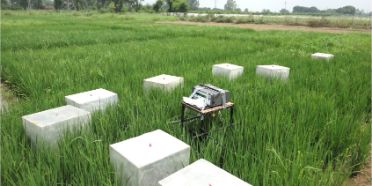
The overall goal of this project is ‘to develop a Transformative Production System (TPS), utilizing the functional diversity of plant species available in different rice-growing environments to intercrop rice and enhance the multifunctionality of the landscape’. We hypothesise that ‘intercropping (co-cultivation) of rice together with other plant species possessing high rhizosphere oxidation capability will significantly reduce CH4 emissions from paddy fields while enhancing biodiversity’. The Novelty of our proposed research lies in the unique integration of and localised utilisation of the natural biodiversity informed by historic and native know-how in local rice farming cultures together with the cutting-edge scientific tools to develop a TPS. This holistic and inclusive framework will help tackle the global challenges of climate change and biodiversity loss by aligning them with tangible local benefits.
Course of action
This project develops and tests a novel production system that transforms predominantly monocultured rice (Oryza sativa) paddies into multifunctional, sustainable ecosystems. Using a multi- and trans-disciplinary approach, it combines technical and socio-economic expertise while engaging diverse stakeholders to maximise impact. The project addresses both environmental drivers of biodiversity loss and the socio-economic and policy factors influencing adoption at scale. Rice, grown on over 165 million hectares globally, is largely produced in intensive irrigated monocultures that drive biodiversity loss, soil degradation, and environmental pollution. While intercropping has improved resilience and sustainability in other systems, it remains underused in rice cultivation. ProEcoRice aims to develop a Transformative Production System (TPS) that leverages plant functional diversity to intercrop rice with species adapted to local conditions. It hypothesises that co-cultivation with plants capable of strong rhizosphere oxidation can significantly reduce methane emissions while enhancing biodiversity. The project’s novelty lies in integrating traditional, locally adapted knowledge with advanced scientific methods to design sustainable rice systems. This holistic approach targets climate change mitigation and biodiversity conservation while delivering local benefits. Notably, intercropping for methane reduction in rice systems remains largely unexplored beyond preliminary studies.