


Small animals, big impact: Micro-livestock for food security in Africa
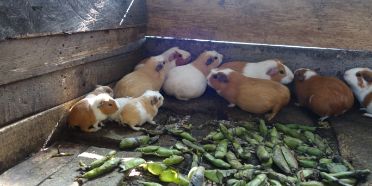
Cavies, (guinea pigs), have are not only used in the Andes, but also in Africa, from Senegal to Tanzania. However, research is lacking on the topic, even though the animal is a great livestock , producing accessible protein.
Steckbrief
- Beteiligte Departemente Hochschule für Agrar-, Forst- und Lebensmittelwissenschaften
-
Institut(e)
HAFL Institut Hugo P. Cecchini
Agronomie - Forschungseinheit(en) Internationale Landwirtschaft und ländliche Entwicklung
- Förderorganisation BFH
- Laufzeit (geplant) 01.02.2026 - 31.12.2026
- Projektleitung Stefan Graf
- Projektmitarbeitende Stefan Graf
- Partner Berner Fachhochschule
- Schlüsselwörter Livestock, Cavies, Agricutlure, Integration
Ausgangslage
Cavies, while an important part of the diet in many Sub-Saharan African countries, are understudied on the continent. While in the Andes the weight of cavies has almost been tripled in 40 years of selection and improved management, with increased prolificity and faster growth rate, cavy production in Africa is still done under suboptimal conditions. For example in refugee camps in Uganda, where a share of the population raises cavies for meat, they are often kept in kitchens or sheds, with uncontrolled breeding and management, as well as suboptimal feeding. While there are a few studies on cavy production in Africa, no publications on refugee camps could be found. While some NGOs support cavy production, extension material is not yet widely available.