VAAKA
Transforming industrial waste into sustainable innovation: a bio-based, fluorine-free superhydrophobic coating as an alternative to PFAS.
Factsheet
- Schools involved School of Engineering and Computer Science
- Institute(s) Institute for Surface Applied Laser, Phototonics and Surface Technologies ALPS
- Research unit(s) ALPS / Thin Films and Surface Engineering
- Funding organisation Others
- Duration (planned) 01.01.2026 - 31.08.2026
- Head of project Prof. Dr. Sylvain David Le Coultre
-
Project staff
Arnaud Schöni
Diane Ardignac - Partner Gebert Rüf Stiftung
Situation
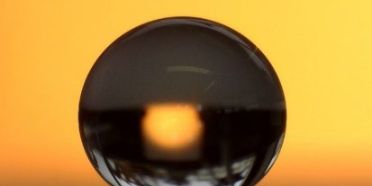
Today PFAS-related pollution has become a major environmental concern. These fluorinated compounds, widely used in hydrophobic coatings, raise serious issues due to their persistence and toxicity. In this context, developing sustainable, fluorine-free alternatives for advanced materials is a key challenge for the future. This project aims to develop bio-based superhydrophobic coatings inspired by nature. The idea is to use wood as a sustainable raw material to ensure full biodegradability, without the use of fluorinated compounds. Wood is mainly composed of cellulose, hemicellulose and lignin. Among these components, lignin is particularly promising: it is a by-product of the pulp and paper industry, currently mostly burned for energy production. However, this abundant phenolic macromolecule, one of the most widespread on Earth, exhibits highly interesting chemical properties that remain largely underexploited.
Course of action
This project therefore proposes to valorize this industrial waste by transforming it into a high-value functional material. The goal is not only to develop a sustainable alternative to fluorinated coatings, but also to open new pathways for applications in biorefineries and advanced sustainable materials. A first proof of concept for a non-fluorinated, sustainable superhydrophobic coating was successfully developed at BFH in 2024. The current phase focuses on optimizing the nanocomposite formulation, notably by leveraging lignin-based and other bio-based materials, and validating its abrasion resistance, durability, and environmental safety through standardized testing and Life Cycle Assessment. In parallel, preliminary trials with potential customers are being conducted to gather feedback and assess real-world performance.